
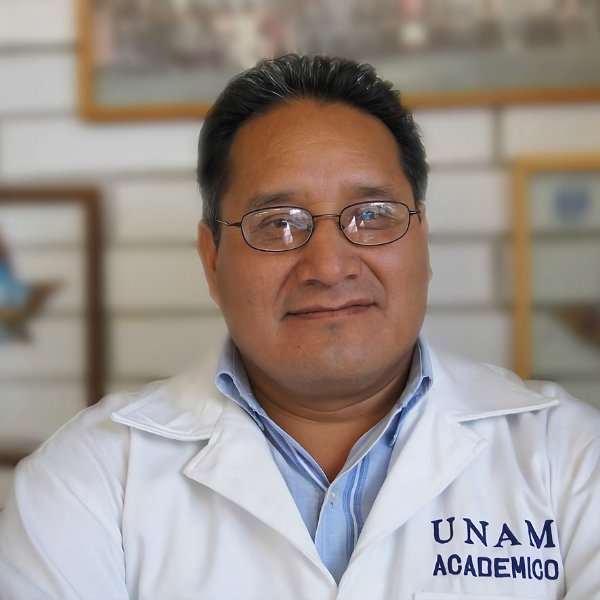
A distinguished professional with a D. in Biological Sciences, has been deeply involved in biomedical research and teaching in his field. Essential in numerous projects on hematology oncology y regenerative medicine, has led high-impact research for more than three decades. His scientific contributions are evidenced in numerous international publications, ranging from the biology of blood cells to pioneering studies with mesenchymal stem cells. He has also contributed significantly to the training of new professionals, directing undergraduate and graduate theses, and has been recognized with prestigious distinctions such as membership in the National System of Researchers (Level II) and the Mexican Academy of Sciences, exemplifying his dedication to advanced research and education in his specialty.
Academic Background
- Bachelor's Degree in Biology - Universidad Nacional Autónoma de México (FES Zaragoza), degree obtained in 1987 with an undergraduate thesis on the effect of bone marrow lymphocytes and monocytes on myeloid cell proliferation, reflecting his early interest in the interaction between the immune system and malignant cells.
- Master of Science (Biology) - National Autonomous University of Mexico (Faculty of Sciences, 1987-1989). He obtained his degree in 1990, deepening his training in cellular and molecular biology.
- D. in Science (Biology) - National Autonomous University of Mexico (1990-1996). She obtained her degree in 1996 with a research focused on the free radicals within the cellular defense system and DNA damage. His doctoral thesis focused on the induction of Fc receptor expression by interleukin-1 in normal and leukemic myeloid cells, consolidating his profile as a scientist specialized in immunological mechanisms of leukemia.
Lines of Research and Scientific Contributions
- Hematopoiesis and Leukemia: Dr. Santiago Osorio has developed most of his career in the study of the hematopoiesis (formation of blood cells) and the leukemias. As leader of the Hematopoiesis and Leukemia Laboratory at FES Zaragoza (UNAM), investigates the cellular and molecular basis of myeloid leukemias. He has contributed to the understanding of how blood progenitor cells are malignantly transformed and how they interact with their immunological microenvironment. He has contributed key knowledge for the development of new therapeutic strategies in hematologic oncology.
- Cancer Immunology: Complementing his focus on leukemia, his training in immunology has allowed him to explore how the immune system can control or promote the development of cancer. From his early studies to his doctoral research in immunological receptors, Dr. Osorio has delved into the intersection between immunology y oncology. This perspective immuno-oncology has allowed him to participate in biological and immunomodulatory therapy projects, seeking to boost the immune response against leukemic cells.
- Stem Cell Therapies and Regenerative Medicine: As part of his multidisciplinary work, Dr. Santiago Osorio has extended his work to the field of regenerative medicine through the study of mesenchymal stem cells (MSC). He has co-authored research evaluating the application of stem cells derived from dental pulp in the regeneration of damaged periodontal tissues, achieving gingival tissue regeneration in patients with periodontal disease. Additionally, he teaches specialized courses in “Stem Cells in Biomedicine” at UNAM, keeping himself updated in this field. His participation in Latin American stem cell congresses and collaborations in clinical studies reflect his contribution to the development of innovative cell therapies.
- Metabolism and Aging: Dr. Osorio has also collaborated in research on the oxidative stress, the aging and the metabolism, recognizing the relevance of these factors in hematological and oncological diseases. He has studied, for example, the relationship between telomere length and oxidative stress in older adults with metabolic syndrome, providing evidence of how cellular aging and metabolic imbalances can influence immune health and cancer risk. These interdisciplinary efforts, which connect the gerontology with cell biology, demonstrate their ability to integrate knowledge from different areas to gain a broader understanding of human pathophysiology.
Achievements and Distinctions
Throughout his career, Dr. Edelmiro Santiago Osorio has received several awards that underline the importance of his scientific contributions:
- National System of Researchers (SNI) Level II: His classification as a National Researcher Level II by the National Council of Science and Technology (CONACyT) reflects his high productivity and research quality. He has maintained this distinction in multiple periods, an indicator of his sustained influence in the national scientific arena.
- Member of Scientific Academies: He was admitted as a member of the Mexican Academy of Sciences, He has also served as a founding member of interdisciplinary research networks, such as the He has also served as a founding member of interdisciplinary research networks, such as the GISeM (Interdisciplinary Research Group in Sechium edule in Mexico), showing their interest in bioactive compounds of plant origin with therapeutic potential.
- Awards in Congresses and Innovation: She has received awards for presentations at international forums, such as first place for best scientific poster at a congress on functional foods and nutraceuticals (2018) for a paper on plant extracts that induce apoptosis in lung cancer cells. In 2019 he won an award at a geriatrics congress for investigating the relationship between metabolic syndrome and oxidative stress in older adults. In addition, his innovative spirit led him to co-invent a pharmaceutical composition based on sodium caseinate with chemotherapeutics to improve cancer treatment, a development recognized (5th place) in 2020 by UNAM's Patenting and Innovation Program (PROFOPI).
- Academic Background: With more than 30 years of academic service at UNAM, Dr. Santiago Osorio has trained numerous generations of professionals in biology and health sciences. He has directed and advised bachelor's, master's and doctoral theses, and has been a juror in countless professional exams. In 2018 he received a diploma for three decades of academic work. His candidacy in the same year for the position of Director of FES Zaragoza evidenced the community's confidence in his academic and institutional leadership.
Outstanding Scientific Publications
- "Dental Pulp Mesenchymal Stem Cells as a Treatment for Periodontal Disease in Older Adults." Stem Cells International, 2020. Pioneering co-authored study demonstrating the efficacy of dental pulp-derived mesenchymal stem cells to regenerate periodontal tissues in elderly patients.
- "Casein induces the proliferation of bone marrow mononuclear cells, apoptosis of WEHI-3 leukemic cells and increased survival in a leukemia mouse model." Oncology Letters, 4(3):461-466 (2012). Research that reported for the first time the antileukemic effect of sodium caseinate, both in vitro like in vivo, The results of this study have laid the groundwork for combination therapies in myeloid leukemia.
- “Improved Survival of Leukemic Mice Treated with Sodium Caseinate in Combination with Daunorubicin without Toxicity.” Journal of Oncology, 2021. More recent work demonstrating that the addition of sodium caseinate to traditional chemotherapy (daunorubicin) boosts survival in murine models of leukemia without increasing toxicity, suggesting a path toward more effective and safer treatments.